
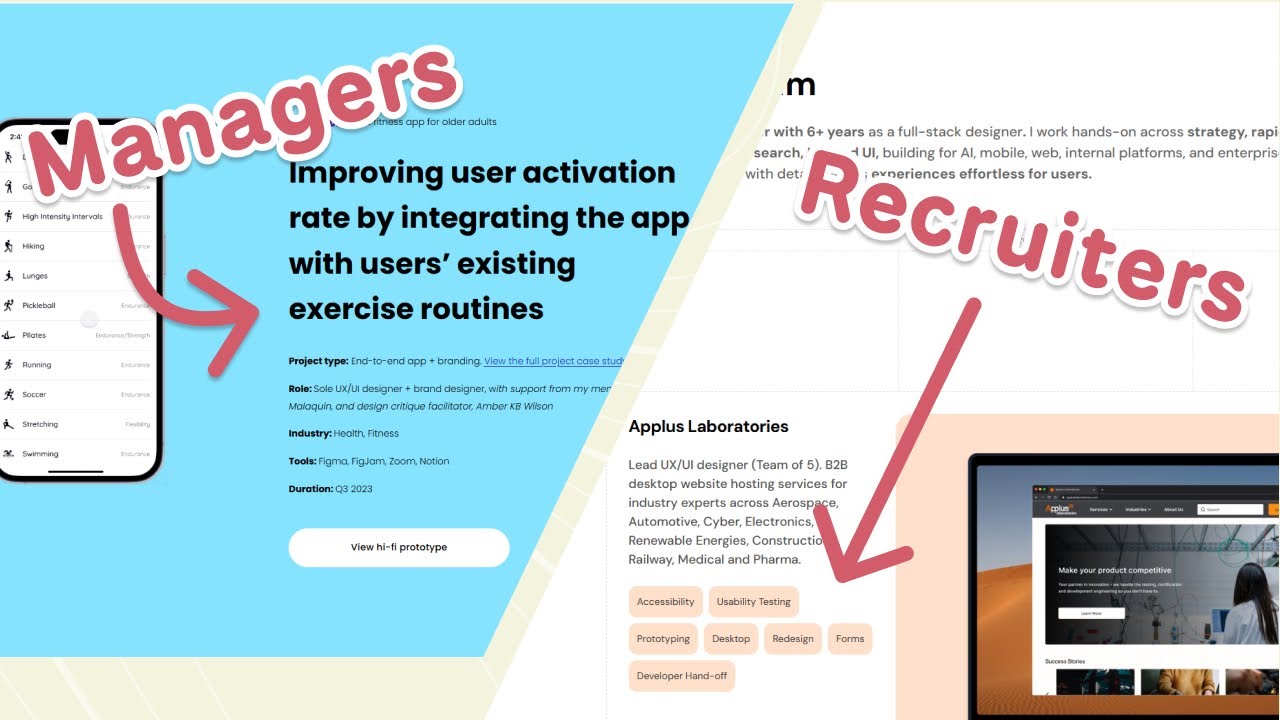
Every portfolio has three readers — and they are not looking for the same thing. This session walks through each audience, what they scan for, and where to put the signal so you stop optimizing for the wrong person.
1. Recruiters: phrase-matching and scannable facts
Recruiters often do not have deep domain knowledge for the role. Their job is to match your materials to the job description: keywords, titles, hard skills, and enough clarity to move you forward.
On case studies, lead with housekeeping recruiters expect: timeline, your role, scope, and a short overview plus impact metrics when you have them.
2. Hiring managers: process, judgment, and proof
Hiring managers care about soft skills — how you break problems down, collaborate, validate decisions, and communicate trade-offs. They will open your strongest case study and scan for process, teamwork, and evidence that the work moved something. When hard numbers are unavailable, behavior change still counts: what do people do differently because this shipped?
3. Future peers: referrals and personality
The best path into most companies is still a referral. Future peers are deciding whether they would want to work beside you — which means your about page matters as much as your hero project.
Show personality, hobbies, and how you collaborate. Less corporate bio, more human.
What to do next
Pick the audience you have been neglecting. If applications go nowhere, fix recruiter-facing keywords and summaries. If you get screens but not loops, strengthen process storytelling. If peers will not refer you, rewrite your about page first.