
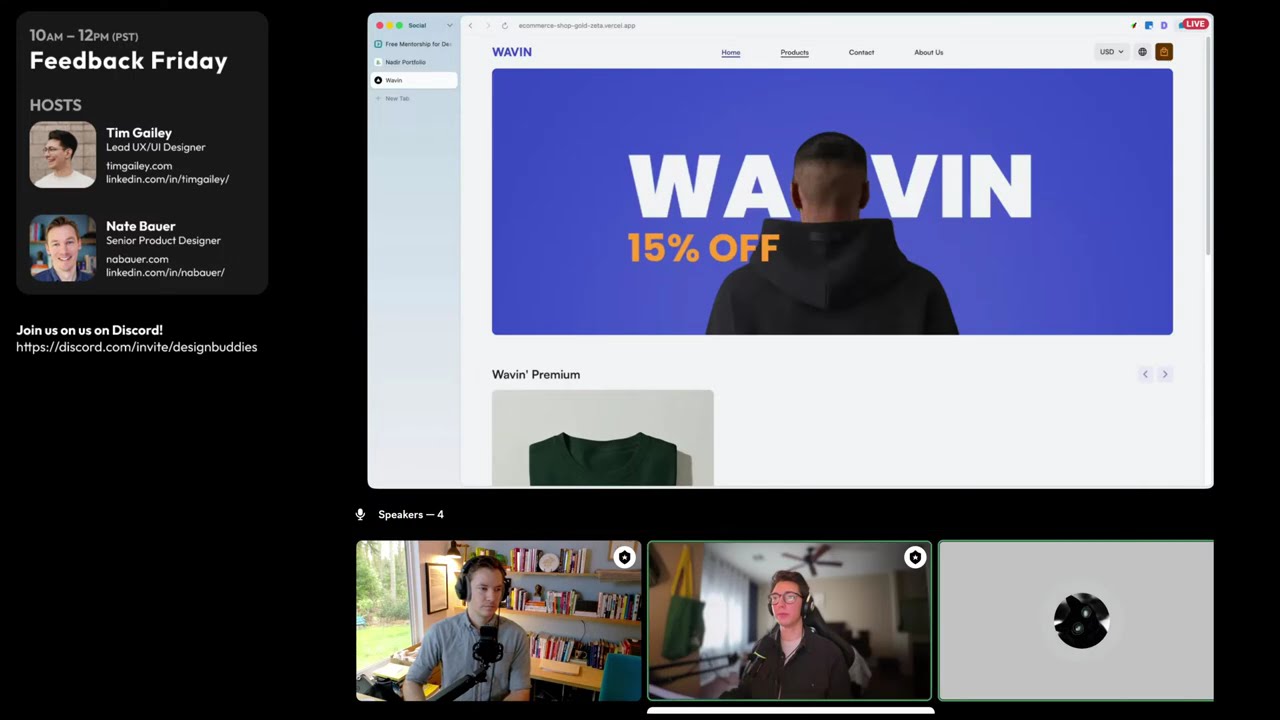
1. No about page, no referral path
Networking and referrals are still the dominant hiring path. Without an about page, you give future peers nothing to share when someone asks “do you know a designer?”
2. Section titles are storytelling opportunities
Several portfolios had headings that described activity (“Research phase”) instead of insight (“Users could not complete checkout without calling support”). Rewrite titles so skimmers learn something from headings alone.
3. Web dev portfolios need different expertise
We are upfront when a portfolio targets front-end development — our feedback is design-career oriented. Know your reviewers’ lane and seek matching critique for code-heavy work.
4. Photography showcases on product design portfolios confuse positioning
A Framer photography widget on a product design portfolio sends mixed signals. Every homepage element should reinforce the role you are targeting.
5. Junior vs mid case studies look different
Junior work shows tactical execution. Mid-level work shows rationale, trade-offs, and scope decisions. If you are aiming mid, the case study depth has to match.
